Should You Self-Drive in Madagascar? Everything You Need to Know
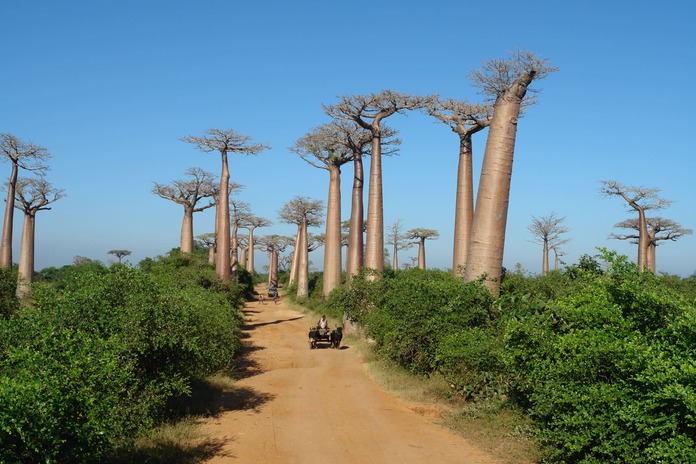
What are road conditions like in Madagascar?
Madagascar has a road network of over 50,000 kilometers, but only 11.6% of these roads are paved. The national roads (Routes Nationales or RN) are the main arteries, but their condition varies dramatically. The RN7, connecting Antananarivo to Tulear over 950 km, is the country's most traveled road and remains generally passable by SUV, though it has degraded sections. However, the RN5 along the east coast often becomes impassable during the rainy season (November to March), and the RN8 to Morondava involves river crossings that require a robust 4x4.
Beyond the main national roads, most routes are unpaved red-earth tracks that can be sandy, muddy, or both. These tracks deteriorate significantly during the wet season, making some stretches inaccessible for months at a time.
Key challenges on Madagascar's roads
- Potholes — even on paved roads, they are frequent and sometimes deep enough to damage a vehicle
- Zebu cattle and pedestrians — herds of zebu regularly cross roads without warning
- Signage — virtually nonexistent outside major cities
- Lighting — no street lighting on national roads, making night driving extremely dangerous
- Bridges — some are in poor condition or replaced by river fords
- GPS reliability — many roads and tracks are not accurately mapped in GPS systems
Self-drive or driver-guide: which option should you choose?
The decision to self-drive or hire a driver-guide is one of the most important choices when planning a trip to Madagascar. Self-driving offers complete freedom over your itinerary and schedule, but carries significant risks for travelers unfamiliar with local roads. A professional driver-guide knows the routes, shortcuts, areas to avoid, and can communicate with locals in Malagasy. In case of a breakdown or accident in a remote area, a local driver can find help far more quickly than a tourist alone. Most experienced Madagascar travelers strongly recommend hiring a driver-guide, especially for a first visit.
| Criteria | Self-drive | With driver-guide |
|---|---|---|
| Safety | Higher risk (unknown roads) | Much safer |
| Freedom | Total | Very flexible (custom itinerary) |
| Extra cost | 0 EUR | 40 EUR/day |
| Language barrier | Problematic outside cities | None (bilingual FR/EN guide) |
| Route knowledge | GPS often inaccurate | Perfect knowledge of terrain |
| Breakdowns | Difficult in remote areas | Quick assistance + local network |
| Cultural experience | Limited | Enriched (commentary, traditions) |
What driving license do you need in Madagascar?
To drive in Madagascar as a tourist, you must hold an International Driving Permit (IDP) in addition to your national driving license. The IDP must be obtained in your home country before departure — it cannot be issued in Madagascar. It is typically valid for 3 years and costs between 15 and 25 EUR depending on the country. Driving in Madagascar is on the right side of the road, as in continental Europe and the United States. The minimum age to rent a vehicle is generally 21, with at least 2 years of driving experience. Note that some insurance companies may impose additional conditions for self-driving on unpaved tracks.
Which vehicle should you choose for Madagascar?
Your vehicle choice depends entirely on your itinerary. For main routes like the RN7 (Antananarivo to Tulear) or the RN2 (Antananarivo to Tamatave), a comfort SUV may be sufficient. But as soon as you leave the main national roads — which is inevitable to reach spectacular sites like the Avenue of the Baobabs or Tsingy de Bemaraha National Park — a robust 4x4 is essential. Toyota Land Cruisers and Mitsubishi Pajeros are the vehicles best suited to Madagascar's tracks. At Drive in Mada, rental rates start from 65 EUR/day for an SUV and 90 EUR/day for a 4x4, with unlimited mileage and insurance included.
Vehicle recommendations by route
| Route | Distance | Recommended vehicle | Duration |
|---|---|---|---|
| RN7: Antananarivo — Tulear | 950 km | SUV or 4x4 | 3-4 days |
| RN2: Antananarivo — Tamatave | 350 km | SUV | 1 day |
| RN8: Antananarivo — Morondava | 700 km | 4x4 required | 2-3 days |
| Morondava — Avenue of Baobabs | 20 km | 4x4 | 30 min |
| Antananarivo — Nosy Be (by road) | ~1,000 km | 4x4 | 3-4 days |
Why is night driving dangerous in Madagascar?
Night driving is strongly discouraged in Madagascar, even for experienced local drivers. National roads have no street lighting whatsoever. Pedestrians, cyclists, and zebu-drawn carts travel without any reflective equipment. Potholes, invisible in the dark, can severely damage a vehicle or cause accidents. Additionally, the risk of dahalo (highway bandits) increases significantly at night in certain regions of the south and west. It is recommended to plan your daily stages so you arrive at your destination before 5 PM. If you travel with a Drive in Mada driver-guide, they will always ensure this safety rule is followed.
How much does a vehicle with driver cost in Madagascar?
At Drive in Mada, rental rates with a driver-guide include the vehicle, a professional bilingual driver (French/English), unlimited mileage, and 24/7 roadside assistance. Here are the indicative rates:
| Vehicle | Rental/day | Driver-guide | Total/day |
|---|---|---|---|
| Comfort SUV (4 seats) | 65 EUR | +40 EUR | 105 EUR |
| Toyota 4x4 (Land Cruiser, Pajero) | 90 EUR | +40 EUR | 130 EUR |
| Minibus (8-15 seats) | 125 EUR | +40 EUR | 165 EUR |
All rates include unlimited mileage, basic insurance, and 24/7 roadside assistance. The driver's accommodation and meals are at the client's expense (approximately 15-20 EUR per day).
Need a vehicle with driver in Madagascar?
Drive in Mada offers 4x4, SUV, and minibus rentals with bilingual driver-guides. Over 10 years of experience on Madagascar's roads.
Get a free quotePractical tips for traveling Madagascar's roads
- Hire a driver-guide — especially for a first trip. The extra cost (40 EUR/day) is well worth the safety and cultural experience.
- Choose a 4x4 if your itinerary goes beyond the main national roads.
- Avoid night driving — plan your stages to arrive before 5 PM.
- Allow extra travel time — distances in kilometers do not reflect actual travel times on Madagascar's tracks.
- Carry water and supplies — gas stations and restaurants are scarce on some stretches.
- Check the season — the rainy season (November to March) makes many tracks impassable.
- Ensure 24/7 roadside assistance — essential in case of breakdown in a remote area.

Drive in Mada
Car rental and tour operator in Antananarivo, Madagascar. Over 10 years of experience on Madagascar's roads. Contact: info@driveinmada.mg | +261 38 29 724 46